A reliable electrical network depends on equipment that can transfer electricity efficiently from generating stations to distribution systems and end users. One of the most important components in this process is the substation power transformer, which adjusts voltage levels to support safe, efficient power transmission and distribution. Understanding its operation, construction, selection criteria, and maintenance requirements helps engineers, facility managers, and infrastructure planners make informed decisions about electrical systems.
What Is a Substation Power Transformer?
A substation power transformer is an electrical device that transfers energy between circuits through electromagnetic induction while increasing or decreasing voltage. It enables electricity to travel over long distances at high voltages and then reach consumers at suitable distribution voltages.
Power generation facilities typically produce electricity at voltages that must be increased before long-distance transmission. Higher transmission voltages reduce current for a given power level, helping minimize resistive losses in conductors. Near consumption areas, transformers reduce the voltage to levels appropriate for regional distribution networks and industrial applications.
The required transformer rating, voltage ratio, cooling arrangement, insulation system, and installation design depend on the network’s electrical load and operating conditions.
See also: Choosing a Compact Everyday Accessory for Modern Life
How a Power Transformer Works in an Electrical Substation
The operating principle is based on electromagnetic induction. A transformer contains primary and secondary windings arranged around a magnetic core. When alternating current flows through the primary winding, it produces a changing magnetic field in the core. This changing field induces a voltage in the secondary winding.
The relationship between voltage and the number of winding turns determines whether the transformer increases or decreases voltage. A step-up transformer has more turns on its secondary winding than on its primary winding, while a step-down transformer has fewer turns on the secondary winding.
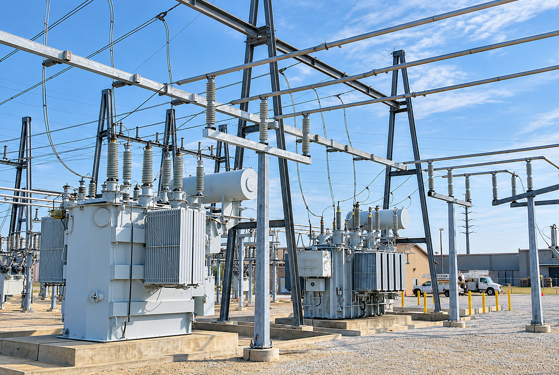
In a power transformer in substation installations, the transformation process supports different stages of the electrical network. The transformer works alongside circuit breakers, disconnectors, protective relays, current transformers, voltage transformers, and busbars. Together, these components help control power flow, isolate faults, measure electrical conditions, and protect equipment.
Main Components and Their Functions
A transformer contains several components that contribute to electrical performance, mechanical strength, insulation, and operational safety.
Magnetic core: Usually constructed from laminated electrical steel, the core provides a path for magnetic flux. Its design helps limit core losses caused by hysteresis and eddy currents.
Windings: Copper or aluminium conductors form the primary and secondary windings. Their arrangement and insulation determine the transformer’s voltage ratio, current capacity, and ability to withstand electrical stresses.
Insulation system: Solid insulation and, in oil-filled designs, insulating liquid separate energized components and help manage heat. Insulation quality has a direct effect on service life and reliability.
Cooling equipment: Radiators, fans, pumps, or other cooling arrangements remove heat generated during operation. The cooling method depends on transformer size, design, and loading conditions.
Bushings: These insulated components allow electrical conductors to pass safely through the grounded transformer tank.
Tap changer: A tap changer adjusts the effective winding turns ratio to regulate the output voltage. Some units permit adjustment only when de-energized, while on-load tap changers can operate under specified load conditions.
Protection devices: Depending on the design, these may include pressure-relief devices, temperature indicators, oil-level indicators, gas-actuated relays, and monitoring sensors.
The Role of Transformers in Power Substations
A power substation connects different sections of an electrical network and provides facilities for voltage transformation, switching, protection, and monitoring. The transformer serves as the main voltage-conversion component within many substations.
At transmission substations, transformers may increase generator output voltage for long-distance transmission or reduce incoming transmission voltage for regional networks. Distribution substations use transformers to supply lower-voltage networks serving homes, commercial buildings, and smaller industrial facilities.
A substation transformer must be selected to match the network’s maximum demand, expected load growth, fault levels, voltage regulation requirements, and reliability objectives. Engineers also consider the consequences of an outage and whether the installation requires a spare unit or multiple transformers operating in parallel.
Types of Transformers Used in Substations
Different applications require different transformer designs. The main categories include:
Step-up transformers: These increase voltage and reduce current for a given power transfer, making them suitable for transmission applications.
Step-down transformers: These reduce voltage to levels required by downstream transmission, distribution, or industrial systems.
Autotransformers: These use a shared winding for primary and secondary circuits. They can be economical for certain voltage ratios, although their electrical isolation characteristics differ from those of conventional two-winding transformers.
Oil-immersed transformers: These use insulating liquid for dielectric insulation and heat transfer. They are widely used in medium- and high-voltage applications, subject to appropriate fire and environmental safeguards.
Dry-type transformers: These use air or solid insulation rather than an insulating liquid. They can suit indoor installations where liquid containment is undesirable, provided their environmental and loading requirements are properly addressed.
Choosing the Right Transformer for a Power Substation
Selecting equipment for a power substation requires more than matching a transformer to the expected electrical load. The decision should account for present operating conditions, future expansion, safety requirements, and the surrounding environment.
Engineers generally assess the following factors:
- Rated power: The transformer must handle expected demand without excessive temperature rise or unacceptable loss of service life.
- Primary and secondary voltages: Voltage ratings must match the connected network and required operating range.
- Impedance: Transformer impedance influences fault current, voltage regulation, and parallel operation.
- Cooling method: Cooling capacity must suit the installation environment and anticipated loading profile.
- Energy efficiency: Core and winding losses affect operating costs throughout the equipment’s service life.
- Site conditions: Ambient temperature, altitude, humidity, pollution, seismic activity, and available space may influence the design.
- Safety and compliance: Applicable electrical standards, fire protection provisions, earthing arrangements, and environmental regulations must be considered.
- Future capacity: Expected load growth may justify additional capacity or a design that supports later expansion.
A compact substation transformer may be appropriate for projects with limited installation space, such as commercial developments, industrial facilities, and urban distribution networks. The suitability of a compact arrangement depends on voltage class, equipment layout, ventilation, access for maintenance, and local safety requirements.
Maintenance Practices That Support Reliable Operation
Routine maintenance helps identify developing faults before they cause unexpected outages or expensive equipment damage. The maintenance schedule should follow the manufacturer’s instructions, operating history, asset criticality, and applicable standards.
For oil-filled transformers, inspections may include checking oil levels, inspecting for leaks, examining bushings, reviewing temperature readings, and testing insulating oil for moisture, dielectric strength, and dissolved gases when appropriate. Dissolved gas analysis can help identify certain developing thermal or electrical faults.
Electrical testing may include insulation resistance measurements, winding resistance tests, turns-ratio verification, and power-factor or dissipation-factor measurements. The appropriate tests depend on the equipment condition and maintenance objective.
Operators should also inspect cooling fans, pumps, protective relays, alarm circuits, and monitoring systems. Infrared thermography can help identify abnormal heating at accessible connections and other components.
All inspections and tests must follow suitable safety procedures. Equipment should be isolated, verified, de-energized, and grounded where required before work begins. Only qualified personnel should perform tasks involving hazardous electrical equipment.
Where Substation Transformers Are Used
Transformers support a wide range of electrical infrastructure, including utility transmission networks, renewable energy connections, manufacturing plants, data centres, mining operations, transport systems, and large commercial developments.
Their specifications vary according to the application. A renewable energy project may require voltage transformation between generation equipment and the grid connection. An industrial facility may need a transformer sized for heavy machinery, motor starting characteristics, and changing demand. Urban distribution networks may prioritize a smaller footprint, low noise, and convenient access for maintenance.
Understanding these differences helps project teams select equipment that meets electrical requirements while accounting for operational costs, safety, and long-term reliability.
Conclusion
A well-designed substation power transformer supports efficient voltage conversion, dependable electricity delivery, and the stable operation of interconnected electrical networks. Its performance depends on suitable engineering specifications, effective protection, appropriate cooling, and consistent condition monitoring. By evaluating load requirements, installation constraints, efficiency, and maintenance needs before procurement, utilities and facility owners can improve reliability and manage the long-term cost of their electrical infrastructure.