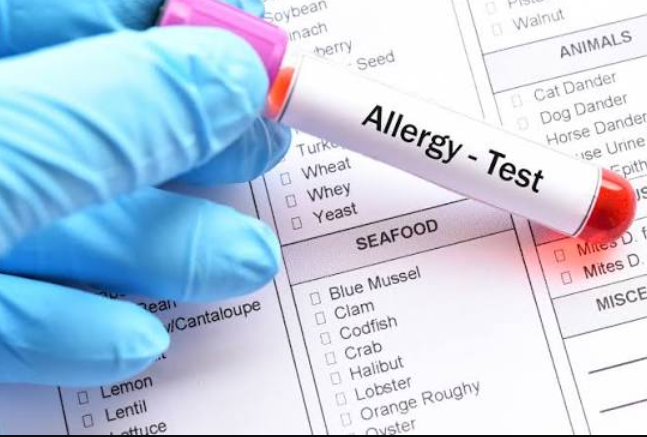
Sneezing through every change in season, a cough that gets worse at night, or an itchy nose each time you dust your house are some of the many complaints. Many people treat these for years without ever discovering the culprit. An allergy test can help you pinpoint the allergen that is causing your symptoms and treat the source, rather than just the symptoms. This article explains what allergy testing is, the common allergens to be tested in India, why it is necessary to conduct a panel of allergens for both asthma and rhinitis, and what the cost of an allergy panel is.
How Allergy Testing Works: Skin Tests vs Blood Tests
Allergen-specific IgE testing comes in two forms: a skin test and a blood test. The skin test is the most common method and is relatively painless, and it exposes the allergy cells in your skin to a specific allergen. [2] The blood test checks for the presence of IgE antibodies to particular allergens. [2]
In a skin prick test, a drop of the suspected allergen is placed on the skin, and the skin is pricked through it. A raised wheal indicates that he or she is allergic to the substance. [3] In clinics, a test is also conducted with allergen and negative controls to ensure accuracy; usually, the test results are ready in 15 minutes or less. [4]
If it is not safe or reliable to take a skin test, such as if you are taking medicine that interferes with your skin test, or if you have a skin condition, a blood test is the best choice. [2] You’re not exposed to any allergen during the procedure, and it can be performed regardless of age, skin condition, medication or pregnancy. [5] [1]
Preparing for an Allergy Test
Skin testing requires that you stop taking antihistamines for about a week, as they interfere with the result. Blood tests have no special preparations. [2] Rarely, skin testing triggers a systemic allergic reaction and should be done under the supervision of a qualified allergist. [2] Always consult with your doctor before making changes to your medication.
IgE Response: What the Numbers Mean
IgE is an antibody produced by your immune system in response to a harmless substance (dust or pollen). A positive test indicates that you are sensitive to the allergen. [1] Higher IgE levels signify a possible allergy, but they don’t indicate severity. [4] If the test is positive, it also does not mean that the allergen is the cause of your symptoms. However, you should consult your history and symptoms. [6]
What the Asthma & Rhinitis Allergy Panel Detects
This panel measures the IgE response to the most common allergens linked with asthma and rhinitis. [1] It tests seven parameters, listed below. [1]
- Common ragweed, a pollen allergen
- Dermatophagoides pteronyssinus and Dermatophagoides farinae, two house dust mite species
- Alternaria tenuis, Aspergillus fumigatus and Penicillium notatum, which are moulds
- Candida albicans, a yeast
- House dust (Greer) and cockroach, common household triggers
The panel is also helpful because allergic rhinitis is regarded as a systemic disease which can cause fatigue, malaise and headache and frequently co-exists with asthma, eczema or chronic sinusitis. [1] It can also be challenging to differentiate from other forms of rhinitis, which are treated with typical rhinitis medications (antihistamines and nasal corticosteroids) that may not work as well in non-allergic rhinitis. [1] An accurate diagnosis thus helps to establish what treatment is likely to be effective.
Common Allergens in India: What Indian Studies Show
Dust mites and cockroaches repeatedly top the list in Indian research.
- North India: An ImmunoCAP study of 274 patients found D. farinae was the most common inhalant allergen (83%), followed by cockroach (79%). Weed pollens, tree pollens, grass pollen mix and mould mix followed at lower rates. [7]
- South India: A Bangalore review of 580 skin prick tests found 79% of patients were sensitized to at least one allergen. House dust mite led at 66.9%, followed by cockroach at 47.2%. Fungal and pollen sensitization were comparatively low. [9] A smaller southern study also found house dust mite most frequent, followed by Parthenium and cockroach. [8]
- Children: In a study of children with allergic rhinitis conducted in South East India, cockroach, dust mite and pollens were the most common sensitizers. [6]
The focus for this pattern can be explained by the selection of dust mites, cockroaches, house dust and indoor moulds. In the global population, allergic rhinitis is estimated to impact 10-30% of the population. An ISAAC phase 3 report placed this at 11.3% in Indian children aged 6–7 and 24.4% in those aged 13–14. [6]
Allergy Test Price in India
Prices depend on the lab, the city, the technology used and the number of allergens tested. The figures below are published listings from one national lab chain (Metropolis Healthcare). They show how cost rises with panel size.
| Panel type | Allergens tested | Listed price |
| Dust panel (Delhi) | 4 | ₹4,360 [10] |
| Adult panel 2 (Pune) | 63, MAST blot method | ₹5,540 [12] |
| Comprehensive allergy panel | Broad allergen panel with total IgE | ₹16,000 [11] |
Smaller, targeted panels cost less than broad screens. A focused panel such as the asthma and rhinitis panel can be a practical starting point when your symptoms point to dust, mould or pollen. Check the current price for your city on the lab’s website before booking.
Home Sample Collection: What to Expect
LifeCell sends DMLT or B.Sc MLT-certified paramedics to collect the sample at home, using strict hygiene protocols and a gentle single-prick technique to keep discomfort low. [1] The process is straightforward. [1]
- Book your test.
- A paramedic collects the sample.
- The lab analyses it.
- You receive your results on time.
Reading Your Results: Positive, Negative and Borderline
If an allergen is indicated on the test, you are allergic to it. Further testing may still be necessary for an accurate diagnosis, based on your symptoms, age, ambient allergens and region-specific allergens. [1] A negative result does not always end the search either. Another test may be needed for a differential diagnosis. [1]
Interpretation of test results should be based on a clinical history. Your doctor will be interested in your environment, your job, any contact with animals, their triggers, and your family history of allergy. [3] Incorrect results may be obtained either way round: sensitization does not necessarily mean that symptoms will be present and, conversely, symptoms accompanied by negative tests may reflect a non-allergic cause.
Who Should Consider an Allergy Test?
Consider testing if you have:
- Recurrent sneezing, blocked or runny nose, or itchy eyes
- Asthma-like symptoms such as wheezing or night-time cough
- Symptoms that worsen in dusty, damp or humid surroundings
- Rhinitis that has not improved with usual medicines
- A need to monitor how well allergy treatment is working [11]
What to Do After Your Allergy Test
After the test, the first thing to do is to talk to the doctor about the report for proper recommendations. [1] Once they follow up regularly, you can then monitor the progress and effectiveness of treatment. [1] Simple measures that can be taken at home may be advised, such as minimizing exposure to dust, managing damp spaces to prevent mould buildup and treating underlying infections with suitable medicines. Don’t change your medication because of the report.
Final Thoughts
An allergy test can help confirm or deny an allergy. It will tell you whether the symptoms are likely to be due to dust mites, cockroaches, moulds or pollens and provide your doctor with a better indication of where to start treatment. Select the test appropriate for your symptoms, interpret the test with caution, and discuss it with a trusted doctor.
References
- LifeCell Diagnostics, Asthma & Rhinitis Allergy Panel: https://www.lifecell.in/product/health-check/asthma-rhinitis-allergy-panel
- Nicklaus Children’s Health System, Allergen-Specific IgE Testing: https://www.nicklauschildrens.org/treatments/allergen-specific-ige-testing
- Leti Allergy, How is allergy diagnosed?: https://alergia.leti.com/en/how-is-it-diagnosed_1681
- Mediclinic, Skin prick testing for food allergies – what to expect: https://www.mediclinic.co.za/en/infohub-corporate/family-life/children-up-to-12-pregnancy-and-paediatrics/skin-prick-testing-for-food-allergies–what-to-expect.html
- LibreTexts Medicine, Diagnosis and Treatment of Allergy: https://med.libretexts.org/Courses/Virginia_Tech_Carilion_School_of_Medicine/Block_V_Preparation_Materials/12%3A_Hypersensitivities/12.02%3A_Diagnosis_and_Treatment_of_Allergy
- PubMed Central, Clinical and sensitization profile of children with allergic rhinitis in South East India: https://pmc.ncbi.nlm.nih.gov/articles/PMC9702381
- Singh S., Identification of prevalent sensitizing allergens in India, World Allergy Organization Journal 2013, 6(Suppl 1):P1: https://waojournal.biomedcentral.com/track/pdf/10.1186/1939-4551-6-S1-P1
- Egyptian Journal of Otolaryngology (2024), Skin prick test reactivity among allergic rhinitis patients in Southern India: https://doaj.org/article/fcb61b79d5a7409287902843c93053fa
- Study of aeroallergen sensitization in naso-bronchial allergy, tertiary centre, India (conference abstract): https://aspergillus.org.uk/conference_abstracts/study-of-aero-allergen-sensitization-in-subjects-with-naso-bronchial-allergy-in-a-tertiary-care-centre-from-india
- Metropolis Healthcare, Allergy Dust Panel (Delhi): https://metropolisindia.com/parameter/delhi/allergy-dust-panel
- Metropolis Healthcare, Comprehensive Allergy Panel: https://www.metropolisindia.com/parameter/allergy-comprehensive-allergy-panel
- Metropolis Healthcare, Allergy Adult Panel 2 (Pune): https://www.metropolisindia.com/parameter/pune/allergy-adult-panel-2