Windows on boats serve a practical purpose, but large areas of exposed glass can also create problems. Strong sunlight can increase interior heat, cause glare on screens, and make seating areas uncomfortable. Long periods of sun exposure can also affect furnishings, upholstery, flooring, and other interior materials.
Marine window film can help manage several of these issues without replacing the existing glass. The right film, however, depends on the type of boat, the location of the windows, the amount of sunlight they receive, and the type of glass already installed.
A film that works well on a small recreational boat may not be the best choice for a yacht with large salon windows. Choosing the film based on the vessel and its glass is therefore more useful than simply selecting the darkest available option.
What Is Marine Window Film?
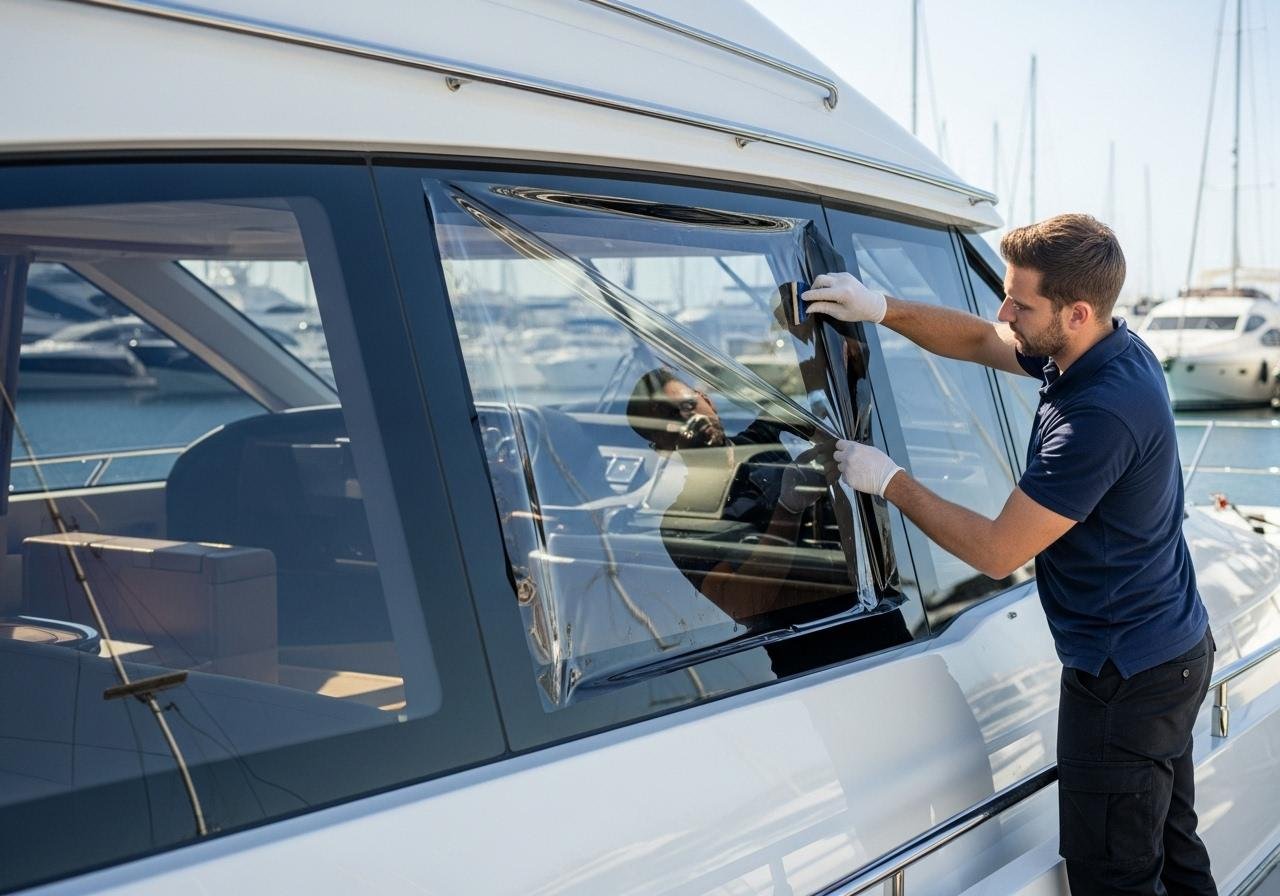
Marine window film is a thin film applied to boat or yacht glass. Depending on its construction, it can be designed to reduce solar heat, control glare, provide UV protection, improve privacy, or change the appearance of the glass.
Marine applications have some specific requirements because the glass is exposed to water, salt, humidity, strong sunlight, and frequent temperature changes.
The film should therefore be suitable for the type of glass and conditions in which it will be used.
Why Boat Owners Use Window Film
Different vessels have different reasons for installing window film. Common applications include:
- Reducing solar heat entering cabins and enclosed seating areas
- Limiting glare on navigation displays and entertainment screens
- Reducing UV exposure through windows
- Increasing privacy in cabins and living areas
- Improving comfort in enclosed spaces
- Giving older or plain-looking glass a more consistent appearance
- Reducing the need to keep blinds or curtains closed during the day
The best result comes from matching the film to the specific problem rather than treating every window in the boat the same way.
Marine Window Film for Small Recreational Boats
Smaller boats often have limited enclosed space, which means sunlight can quickly make the cabin or cockpit area uncomfortable.
For these vessels, solar-control film can be useful on windows that receive direct sunlight for extended periods. A lighter film may be preferable where maintaining visibility and natural light is important.
Glare is another consideration. Reflections from the water can make already-bright conditions more difficult, particularly when using electronic displays.
For a recreational boat, the film selection should balance:
- Heat reduction
- Glare control
- Exterior visibility
- Interior visibility
- Natural light
- The existing appearance of the boat
A very dark film is not automatically the best solution. It can reduce incoming light but may also affect visibility, particularly in low-light conditions.
Choosing Film for Yachts
Yachts often have larger glass areas than smaller recreational boats. Salon windows, cabin windows, sliding glass doors, and other large surfaces can allow substantial sunlight into the interior.
For these applications, solar-control marine window film can help reduce the amount of solar energy entering through the glass.
Privacy may also be more important on yachts because cabins and interior living spaces can be visible from nearby boats, marinas, or docks.
Different areas may therefore require different film characteristics. For example, a yacht owner may prefer a solar-control film in the main salon while choosing a privacy-oriented film for selected cabin windows.
The appearance of the film also matters on larger vessels because inconsistencies across large glass panels can be noticeable.
Marine Window Film for Fishing and Sport Boats
Fishing and sport boats often have windows positioned around the helm and passenger areas. Glare can become particularly distracting when the boat is operating in bright conditions.
A suitable film can help reduce glare while maintaining enough visibility for the operator.
For helm windows, visibility should be treated as a priority. Film selection should take into account the angle of the glass, the direction of sunlight, and the amount of time the boat is used during daylight hours.
The goal is not simply to make the glass darker. The film should provide useful glare or solar control without creating a visibility problem.
Film for Cabin Cruisers and Motorboats
Cabin cruisers and motorboats commonly combine sleeping areas, seating spaces, kitchen or galley areas, and enclosed cabins.
Each section can have different window requirements.
Cabin windows may benefit from additional privacy, while larger salon windows may need stronger solar and glare control. Windows around seating areas can also benefit from UV protection where occupants spend significant periods inside.
Using different film types or shades in separate areas can be more practical than applying one film across the entire vessel.
Marine Window Film for Large Boats and Charter Vessels
Commercial and charter vessels often have frequent passenger use, making interior comfort an important consideration.
Large windows can contribute to heat buildup in passenger areas, especially when the vessel remains in direct sunlight for long periods.
Window film can be considered for:
- Passenger lounges
- Dining areas
- Cabins
- Interior corridors with exterior glazing
- Observation areas
- Large salon windows
The choice should also account for cleaning requirements and the frequency with which the vessel is used.
UV Protection and Interior Materials
Sunlight can affect more than passenger comfort. Prolonged exposure can contribute to fading and deterioration of interior materials.
Upholstery, carpets, wood finishes, curtains, and decorative surfaces can all be exposed to sunlight entering through windows.
UV-control film can reduce the amount of ultraviolet radiation passing through the glass. It does not eliminate every source of interior fading, but it can be one part of a broader strategy for protecting the boat’s interior.
Curtains, blinds, covers, and appropriate interior materials can provide additional protection.
Consider the Existing Boat Glass
The film should be selected only after considering the existing glass.
Boat windows may use different glass constructions, including tempered or laminated glass, and some vessels may have specialized glazing. The film’s compatibility with the glass should be confirmed before installation.
The condition of the glass matters too. Scratches, damaged seals, chips, or existing surface problems should be addressed before applying film.
For this reason, professional assessment is useful for marine applications, particularly when a vessel has large or specialized windows.
What to Check Before Installation
Before installing marine window film, check:
- Glass type: Confirm what type of glazing is installed.
- Window condition: Address damaged or deteriorated glass first.
- Film compatibility: Make sure the selected film is suitable for the application.
- Visibility requirements: Give special attention to helm and navigation areas.
- Light levels: Consider both daytime and low-light use.
- Window size: Large glass panels may require careful installation to achieve a consistent appearance.
- Cleaning conditions: Salt and marine deposits should be considered when planning maintenance.
Professional installation can also help reduce problems such as trapped debris, bubbles, uneven edges, or poor adhesion.
How to Maintain Marine Window Film
Once installed, marine window film still needs regular care.
Use cleaning products and methods recommended for the specific film. Avoid abrasive materials that could scratch the surface. Salt deposits should not be allowed to build up on the glass, particularly when the vessel operates in coastal or saltwater environments.
Cleaning should also be done with suitable soft materials rather than rough tools that can damage the film.
Frequently Asked Questions
Can marine window film reduce heat inside a boat?
Yes. Solar-control films can reduce the amount of solar energy entering through suitable glass, which may make enclosed areas more comfortable.
Is marine window film suitable for yacht windows?
It can be, provided the film is compatible with the yacht’s glass and the intended application. Large yacht windows may require careful film selection and professional installation.
Can window film improve privacy on a boat?
Yes. Privacy films, darker films, and some reflective films can reduce visibility into selected areas. The appropriate option depends on the desired privacy level and visibility requirements.
Does marine window film block UV rays?
Some films are designed to reduce UV transmission through the glass. The specific level of UV protection depends on the film.
Should I use the same film on every boat window?
Not always. Different windows may have different requirements for visibility, privacy, heat control, and glare reduction. Selecting film by window function can produce a more suitable result.